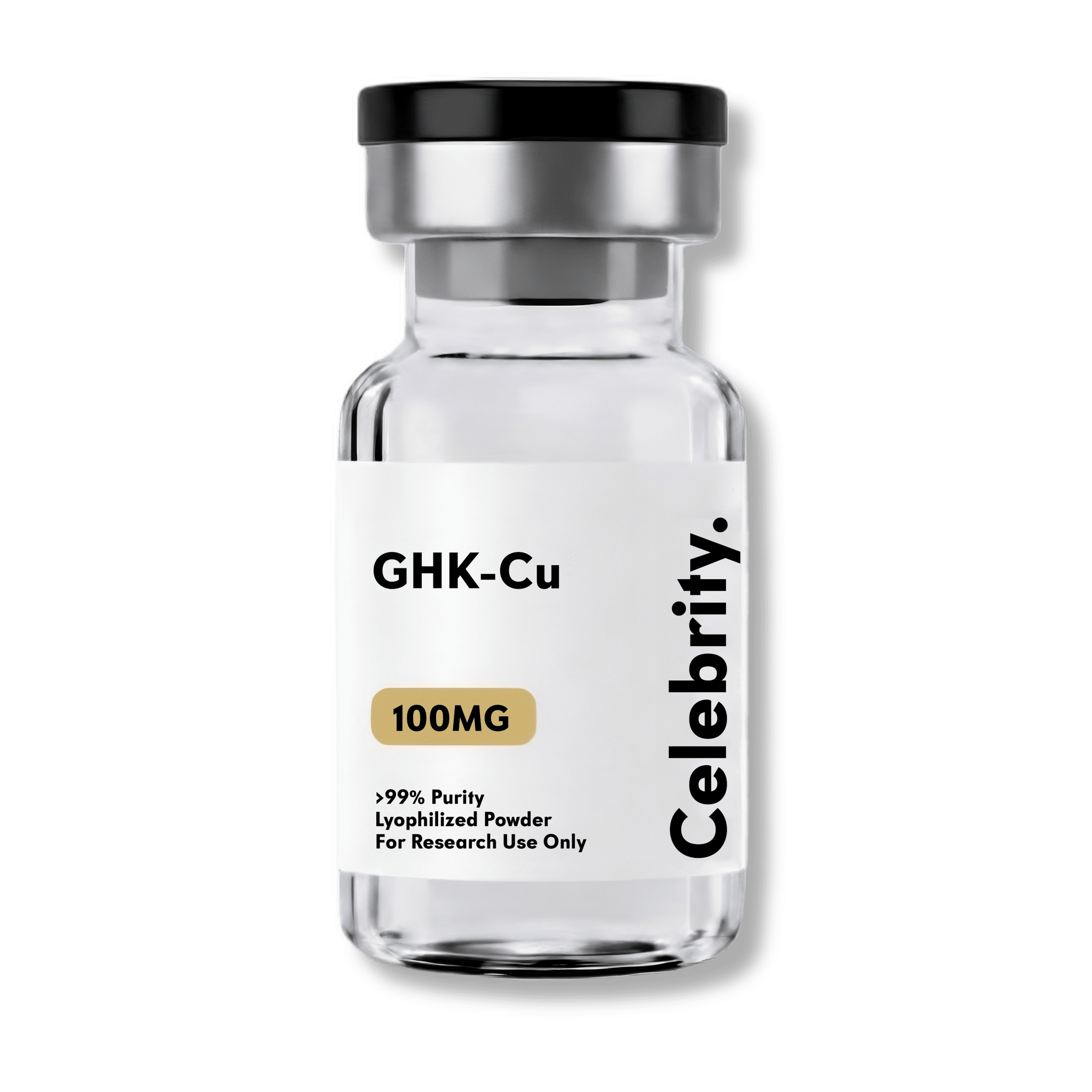
GHK-Cu — Research Overview
GHK-Cu (Copper Tripeptide-1) is a laboratory-supplied synthetic tripeptide–copper complex provided exclusively for controlled non-clinical laboratory and educational research use.
In research environments, GHK-Cu may be utilized for analytical characterization, peptide–metal complex evaluation, and molecular interaction modeling within controlled in-vitro assay systems.
GHK-Cu is a well-documented peptide–copper coordination complex referenced in peptide chemistry and molecular interaction literature. It consists of the tripeptide sequence glycyl-L-histidyl-L-lysine (GHK) bound to a divalent copper ion (Cu²⁺).
This compound is supplied as a reference material for laboratory workflows involving:
- Peptide–metal coordination studies
- Structural modeling and characterization
- Analytical method development
- Stability and degradation profiling
- Assay calibration in controlled environments
All investigations involving this compound are conducted exclusively in non-clinical laboratory settings. No conclusions regarding biological, physiological, or therapeutic outcomes are established by its availability as a research material.
Chemical Name
Glycyl-L-histidyl-L-lysine copper complex
Common Name
Copper Tripeptide-1 (GHK-Cu)
Chemical Classification
Peptide–metal complex
Molecular Formula
C14H24N6O4Cu
Molecular Weight
403.93 g/mol
Structural Components
Glycine residue, histidine residue, lysine residue, copper (Cu²⁺) ion
- Peptide–Metal Interaction Assessment — Evaluation of coordination behavior between peptide sequences and metal ions within controlled analytical systems.
- Stability Profiling — Assessment of complex stability under defined laboratory storage and experimental conditions.
- Molecular Characterization — Structural analysis and modeling of peptide–copper binding dynamics.
- Comparative Peptide Research — Use as a reference compound in peptide chemistry and sequence-based evaluation workflows.
- Analytical Reference Applications — Application in assay development, calibration, and validation involving peptide–metal complexes (non-clinical).
All studies are conducted exclusively in controlled, non-clinical laboratory environments. No biological, physiological, or therapeutic claims are stated or implied.
GHK-Cu is referenced in peptide chemistry and coordination chemistry literature as a tripeptide–copper complex. In laboratory research settings, it serves as a reference material for analytical workflows and molecular modeling systems involving peptide–metal interactions.
This material is not intended to represent or substitute any approved product, treatment, or clinical program. Any information provided is for scientific and educational context only and should be interpreted strictly within controlled research environments.
Important Research Notice
GHK-Cu is supplied strictly for laboratory and educational research use. It is not intended for human or animal use and is not provided for diagnostic, therapeutic, preventative, or medical applications.
Purchasers are responsible for ensuring proper handling, storage, and use in accordance with applicable laws, regulations, and institutional policies.
Selected Academic References
• Peptide–metal coordination chemistry literature
• Structural characterization publications
• Analytical assay development references
• Stability and molecular modeling studies
(References are provided solely for academic and informational context.)
Research-Use Only (RUO)
All products and information provided on this website are intended solely for laboratory, scientific, and educational research purposes. GHK-Cu is not a drug, food, dietary supplement, or medical product. It is not intended for human or animal consumption or use. Products are not intended for injection, ingestion, topical application, or any form of bodily introduction. No content on this website constitutes medical advice, clinical guidance, or endorsement. Any non-research use is strictly prohibited.